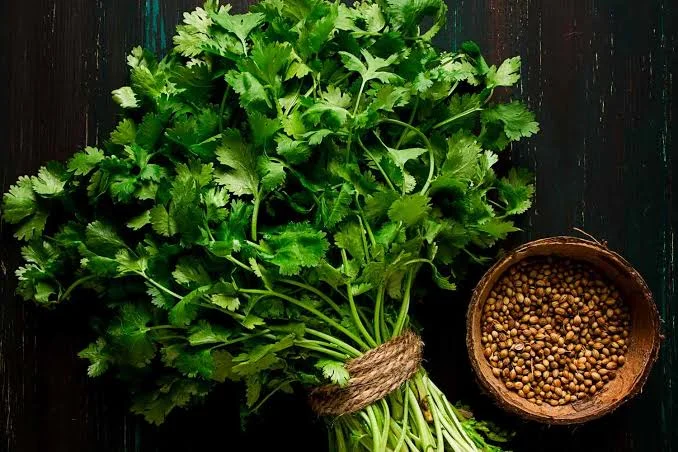

Coriander (Coriandrum sativum), commonly known as dhania in Kenya, is one of the most widely grown and consumed herbs in the country. The crop is valued for its aromatic leaves and seeds, which are used in a variety of culinary, medicinal, and industrial applications. Coriander is a fast-growing crop with a short maturity period, making it an attractive option for both small-scale and commercial farmers seeking quick returns.
Uses of Coriander Leaves and Seeds
Fresh coriander leaves are commonly used as a garnish and flavouring ingredient in foods such as stews, salads, soups, and meat dishes. The leaves add a distinctive aroma and enhance the taste of many traditional and modern recipes.
Coriander seeds are used as a spice in food processing and cooking. They are also utilised in the production of essential oils, herbal products, and natural remedies. Both the leaves and seeds contain valuable nutrients and antioxidants that contribute to their popularity in local and international markets.
Economic Importance of Coriander Farming
Coriander farming offers farmers a reliable source of income due to the crop’s year-round demand. Households, restaurants, hotels, supermarkets, open-air markets, and food processors widely purchase the herb. Its short production cycle allows farmers to harvest and sell multiple crops within a year, improving cash flow.
With proper crop management, irrigation, and balanced nutrition using fertilisers such as Safi Sarvi All Purpose Fertiliser during land preparation and Safi Sarvi Top Dress Fertiliser during vegetative growth, farmers can achieve higher yields and improved quality. This makes coriander farming a profitable enterprise for growers targeting both fresh herb and seed markets.
Farmers interested in expanding their horticultural enterprises can also explore onion cultivation, another high-value crop with strong market demand. Read our guide on Onion Farming in Kenya to learn about the best production practices, nutrient management strategies, and marketing opportunities for onion growers.
Ecological Requirements for Coriander Production
Coriander is a hardy herb that adapts well to various agroecological zones in Kenya. However, optimum growth and high yields are achieved when the crop is grown under suitable environmental conditions. Understanding the crop’s climatic and soil requirements helps farmers establish healthy plants and maximise productivity.
Climate Requirements
Coriander grows best in cool to moderately warm conditions with temperatures ranging between 15°C and 25°C. Extremely high temperatures can cause premature flowering, reducing leaf production and overall yield. The crop performs well in areas with moderate rainfall, although excessive moisture may encourage the development of fungal diseases.
Soil Requirements
Coriander thrives in well-drained, fertile soils rich in organic matter. Sandy loam and loam soils are particularly suitable because they promote good root development and prevent waterlogging. The ideal soil pH ranges from 6.0 to 7.5. Before planting, farmers are encouraged to conduct soil testing and incorporate Safi Sarvi All Purpose Fertiliser to provide essential nutrients that support vigorous early growth.
Altitude Requirements
In Kenya, coriander can be grown successfully in areas ranging from about 500 to 2,500 metres above sea level. However, the crop performs best in medium- to high-altitude regions where temperatures remain relatively cool throughout the growing season.
Sunlight Requirements
Coriander requires full sunlight for optimal growth and high-quality leaf production. The crop should receive at least six hours of direct sunlight daily. Adequate sunlight promotes healthy vegetative growth, enhances leaf aroma, and contributes to higher yields. In very hot regions, light afternoon shade may help reduce heat stress and delay premature flowering.
Popular Coriander Varieties Grown in Kenya
Common Local and Commercial Varieties
Kenya Dhania Local Variety
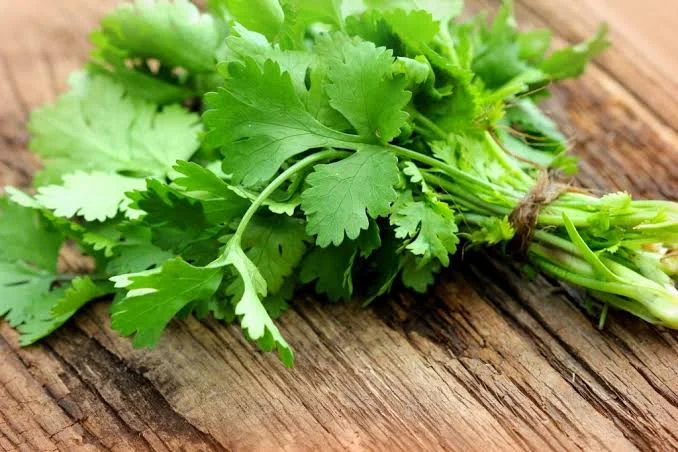
This is the most commonly grown coriander type among small-scale farmers. It is valued for its adaptability to different regions, fast growth, and strong aroma. The variety is mainly grown for fresh leaf production and is widely sold in local markets.
Slow Bolt is a popular commercial variety known for its delayed flowering. It produces leaves for a longer period before bolting, making it suitable for farmers targeting the fresh herb market. The variety also offers good leaf quality and higher yields.
Leisure is a vigorous variety that produces uniform, dark green leaves with a strong fragrance. It is suitable for both open-field and irrigated production systems and is preferred by some commercial growers due to its consistent performance.
Factors to Consider When Selecting a Variety
Market Demand
Farmers should choose varieties that meet the preferences of their target buyers. Fresh markets often prefer varieties with abundant leafy growth and strong aroma.
Purpose of Production
Some varieties are better suited for leaf production, while others are ideal for seed production. Farmers should select varieties based on their intended market.
Climate Adaptability
The chosen variety should perform well under the local climatic conditions, including temperature, rainfall, and altitude.
Resistance and Tolerance
Where possible, farmers should select varieties that exhibit tolerance to common pests, diseases, and environmental stresses.
Maturity Period
Early-maturing varieties allow farmers to harvest sooner and potentially produce multiple crops within a year, improving profitability.
Land Preparation and Planting
Site Selection
Coriander grows best in areas that receive full sunlight and have well-drained, fertile soil. Farmers should avoid fields prone to waterlogging, as excess moisture can lead to poor growth and increased disease incidence. Sites with easy access to irrigation water are ideal, especially in areas with unreliable rainfall.
Land Preparation
The land should be cleared of weeds, crop residues, and other debris before planting. Plough the field thoroughly and harrow to create a fine, loose seedbed that allows for proper seed germination and root development.
Incorporate well-decomposed organic manure during land preparation to improve soil fertility and structure. Farmers can also apply organic Fertiliser to provide essential nutrients required during the early stages of growth.
Seed Selection and Treatment
Farmers should use certified, high-quality seeds obtained from reputable suppliers to ensure good germination and vigorous crop establishment. Seeds should be clean, healthy, and free from pests and diseases.
Before planting, seeds may be soaked in clean water for several hours to enhance germination. Any damaged or discoloured seeds should be discarded to promote uniform crop establishment.
Planting Methods and Spacing
Coriander is usually established through direct seeding in the field. Seeds can be planted by drilling along rows or by broadcasting, although row planting is preferred because it simplifies weeding, irrigation, and crop management.
For leaf production, maintain a spacing of 20–30 cm between rows and 5–10 cm between plants after thinning. When growing coriander for seed production, wider spacing may be used to promote better branching and seed development.
Seeds should be sown at a depth of approximately 1–2 cm and lightly covered with soil. Adequate moisture should be maintained after planting to encourage rapid and uniform germination.
Fertiliser and Nutrient Management for Coriander
Importance of Soil Testing
Soil testing helps farmers determine the nutrient status and pH of their fields before planting. The results guide fertiliser selection and application rates, preventing nutrient deficiencies, wastage, and unnecessary production costs. Regular soil analysis also helps maintain long-term soil fertility and sustainable crop production.
Basal Fertiliser Application
Basal fertilisers should be applied during land preparation or at planting to support early root establishment and vegetative growth. Farmers are encouraged to incorporate well-decomposed organic manure into the soil before planting.
For optimal nutrient supply, apply Safi Sarvi All Purpose Fertiliser at planting. This fertiliser provides essential nutrients required during the early stages of growth, promoting strong root development, vigorous seedlings, and uniform crop establishment.
Top Dressing Requirements
Coriander requires adequate nutrients throughout its growth cycle, especially during active vegetative growth when leaf production is highest. Top dressing should be done about 2 to 4 weeks after emergence, depending on crop performance and soil fertility levels.
Timely top dressing promotes rapid leaf development, improves plant vigour, and enhances yield potential. Fertiliser should be applied when the soil has adequate moisture to facilitate nutrient uptake.
Irrigation and Water Management for Coriander Farming
Adequate water management is essential for successful coriander production. Consistent soil moisture promotes uniform germination, healthy vegetative growth, and high-quality leaf production. Water stress can reduce yields and encourage premature flowering.
Water Requirements
Coriander requires moderate amounts of water throughout its growth cycle. The crop performs best when the soil remains consistently moist but not waterlogged. Moisture is particularly important during germination, seedling establishment, and active vegetative growth. Farmers should adjust irrigation frequency depending on rainfall patterns, soil type, and prevailing weather conditions.
Irrigation Methods
Several irrigation methods can be used for coriander production. Drip irrigation is highly recommended because it delivers water directly to the root zone, reduces wastage, and minimises disease development caused by excessive leaf wetness. Sprinkler irrigation can also be used, especially on larger farms. Where resources are limited, watering cans may be suitable for small-scale production.
Moisture Conservation Practices
Farmers can adopt various practices to conserve soil moisture and improve water use efficiency. Applying organic matter such as compost or well-decomposed manure helps increase the soil’s water-holding capacity. Mulching, timely weed control, and minimum soil disturbance also reduce moisture loss through evaporation and improve crop performance during dry periods.
Weed Management for Coriander Farming
Common Weeds in Coriander Fields
Coriander fields are commonly affected by weeds such as black jack (Bidens pilosa), pigweed (Amaranthus spp.), gallant soldier (Galinsoga parviflora), couch grass (Cynodon dactylon), and nut grass (Cyperus spp.). These weeds compete aggressively with the crop and should be controlled early.
Cultural and Mechanical Control Methods
Maintaining a clean field before planting helps reduce weed pressure. Farmers should carry out regular hand weeding or shallow cultivation, especially during the early growth stages when coriander is most vulnerable to competition. Planting in rows also makes weeding easier and more effective. Crop rotation and the use of clean planting materials further help minimise weed infestations.
Mulching Practices
Mulching is an effective way to suppress weed growth while conserving soil moisture. Organic materials such as dry grass, straw, or crop residues can be spread around the plants after establishment. In addition to reducing weed emergence, mulch helps regulate soil temperature, improve soil structure, and enhance water retention, contributing to healthier coriander growth and higher yields.
Harvesting and Post-Harvest Handling of Coriander
Harvesting Coriander Leaves
Coriander grown for fresh leaves can be harvested about 30 to 45 days after planting, depending on the variety and growing conditions. Harvesting is usually done when the plants have developed sufficient foliage and before flowering begins. Farmers may either uproot the whole plant or selectively cut mature leaves while allowing younger leaves to continue growing.
Harvesting should preferably be carried out during the cool hours of the morning to maintain freshness and reduce moisture loss.
Harvesting Coriander Seeds
For seed production, coriander is harvested when the seed heads turn from green to light brown and the seeds become firm. Delaying harvest may result in seed shattering and yield losses. Plants are usually cut and bundled before being dried in the shade or in a well-ventilated area to allow the seeds to dry properly.
Once adequately dried, the seeds are separated from the plants through threshing and prepared for storage or marketing.
Cleaning, Grading, and Storage
After harvesting, coriander leaves should be cleaned to remove soil, damaged leaves, weeds, and other foreign materials. The produce should then be sorted and graded according to quality, size, colour, and freshness to meet market standards.
Fresh coriander leaves are highly perishable and should be stored in a cool environment with adequate humidity to maintain quality and extend shelf life. Coriander seeds should be thoroughly dried to a safe moisture level before storage. The seeds should be kept in clean, dry, and well-ventilated storage facilities to prevent mould growth, pest infestation, and quality deterioration.
Marketing Opportunities for Coriander in Kenya
Local Markets
Local markets provide one of the most accessible outlets for coriander farmers. Fresh coriander is widely used in Kenyan households and is a common ingredient in many dishes. Farmers can sell their produce directly to consumers, traders, retailers, and open-air market vendors. The crop’s short maturity period allows growers to supply markets frequently and generate regular income.
Supermarkets and Hotels
Supermarkets, restaurants, catering businesses, and hotels represent lucrative markets for fresh coriander. These buyers often require a reliable supply of clean, fresh, and properly packaged produce. Farmers can increase their chances of securing contracts by maintaining high-quality standards, adhering to food safety requirements, and ensuring consistent production throughout the year.
Export Opportunities
The growing global demand for fresh herbs presents export opportunities for Kenyan coriander producers. International markets, particularly in Europe, the Middle East, and other regions, seek high-quality herbs that meet strict quality and phytosanitary standards. Farmers targeting export markets should focus on good agricultural practices, proper post-harvest handling, traceability, and compliance with buyer requirements.
Cost and Profitability of Coriander Farming
Major Production Costs
The main costs involved in coriander production include land preparation, seed purchase, fertilizers, organic manure, irrigation, labour, pest and disease management, and post-harvest handling. Farmers using irrigation may incur additional expenses related to water supply and irrigation equipment. Proper planning and efficient resource utilization can help reduce production costs and improve returns.
Expected Yields
Yield levels vary depending on the variety grown, environmental conditions, and crop management practices. Under good agronomic practices, coriander grown for fresh leaves can produce multiple harvests and provide substantial yields throughout the production cycle. Farmers who maintain proper nutrition, irrigation, and pest management generally achieve higher productivity and better-quality produce.
Income Potential
Coriander offers attractive income opportunities because of its continuous demand in local and commercial markets. The crop matures quickly, allowing farmers to generate revenue within a relatively short period after planting. Growers supplying supermarkets, hotels, restaurants, and other premium markets may earn higher returns by consistently providing fresh, high-quality produce.
Conclusion
In conclusion, coriander farming is a profitable horticultural enterprise that can provide farmers with a steady source of income due to its short maturity period and strong market demand. Success in coriander production depends on selecting suitable varieties, using quality seeds, preparing the land properly, maintaining adequate irrigation, controlling weeds, pests, and diseases, and harvesting at the right time.
By combining good agronomic practices with proper fertilization and effective market planning, farmers can improve productivity, enhance produce quality, and maximize profitability from coriander farming.
Farmers should also keep accurate production records, monitor market trends, and continuously adopt improved farming practices. Investing in soil health, efficient water management, and quality inputs can contribute to sustainable coriander production and long-term success in the horticulture sector.