
Chilli farming has become one of the most profitable horticultural enterprises in Kenya due to the growing demand for fresh and processed chillies in local and export markets. Varieties such as Bird’s Eye Chili, Cayenne, and African Chili are widely cultivated by farmers seeking high returns from relatively small pieces of land.
However, achieving high yields and quality fruits depends heavily on proper crop nutrition and soil management throughout the growing season.
Proper soil nutrition is essential for vigorous plant growth, abundant flowering, and consistent fruit production. Chili plants require a steady supply of nutrients to develop strong roots, healthy foliage, and marketable fruits.
When nutrients are inadequate or unavailable, farmers often experience reduced yields, poor fruit quality, delayed maturity, and increased susceptibility to pests and diseases.
Many chili farmers face fertility challenges such as nutrient depletion from continuous cultivation, soil acidity, low organic matter content, and nutrient losses through leaching during heavy rains.
These issues can significantly limit crop performance and reduce fertilizer efficiency if not properly addressed.
For a complete guide on chili production practices, read our article on chili farming in Kenya.
Why Fertilizer Selection Matters in Chili Farming
Choosing the right fertilizer is one of the most important decisions a chili farmer can make. Fertilizer affects not only crop growth but also fruit yield, quality, disease resistance, and long-term soil productivity. A
well-balanced fertilization program ensures that chili plants receive the nutrients they need at every stage of development.
Nutrient Demand of Chili Plants
Chilli plants have varying nutrient requirements throughout their growth cycle. Understanding these needs helps farmers apply the right nutrients at the right time for maximum productivity.
Nutrients Required During Vegetative Growth
During early growth stages, chilli plants require adequate nitrogen to promote healthy leaf and stem development.
Phosphorus is essential for strong root establishment, while potassium supports overall plant vigor and stress tolerance.
Nutrients Needed During Flowering and Fruiting
As chili plants enter the reproductive stage, their nutrient requirements shift. Potassium becomes especially important for flower formation, fruit development, and fruit quality.
Phosphorus continues to support flowering and energy transfer within the plant, while calcium and magnesium help maintain healthy fruit growth and prevent physiological disorders.
Lastly, Micronutrients such as boron and zinc also play a critical role in flower retention and fruit set.
How Nutrient Deficiencies Reduce Yields and Fruit Quality
Nutrient deficiencies can significantly affect chili production. Deficient plants often exhibit stunted growth, poor flowering, flower drop, reduced fruit set, smaller fruits, and uneven ripening.
In severe cases, nutrient stress weakens the plant’s natural defenses, making it more vulnerable to diseases and environmental stress. As a result, farmers may experience lower yields and reduced market value of their produce.
Characteristics of the Best Fertilizer for Chili Farming
The best fertilizer for chili farming should do more than simply supply nutrients. It should improve soil health and support sustainable crop production over multiple seasons.
Balanced Nutrient Supply
A good fertilizer provides a balanced mix of essential macro and micronutrients required for healthy plant growth, flowering, and fruit development.
Improved Nutrient Retention
Effective fertilizers help reduce nutrient losses through leaching and ensure nutrients remain available to plants for longer periods, improving fertilizer efficiency.
Enhanced Soil Health
Healthy soils support strong root systems and beneficial microbial activity. Fertilizers that improve soil biological activity contribute to better nutrient cycling and long-term productivity.
Better Moisture Management
Chili crops perform best when soil moisture remains relatively stable. Fertilizers and soil amendments that improve water retention help plants withstand dry periods and reduce drought stress.
Long-Term Soil Fertility Improvement
The most sustainable fertilizer solutions not only support the current crop but also improve soil structure, organic matter content, and nutrient availability for future growing seasons. This approach helps farmers maintain productivity while reducing dependence on excessive chemical inputs.
Common Nutrient Deficiencies in Chili Farming and Their Symptoms
Nutrient deficiencies are among the leading causes of low yields and poor fruit quality in chili farming. Since chili plants require a continuous supply of essential nutrients throughout their growth cycle, any imbalance can quickly affect plant health and productivity.
Nitrogen Deficiency
Nitrogen is essential for leaf development, chlorophyll production, and overall plant growth. When chili plants lack sufficient nitrogen, their growth slows down and productivity declines.
Common symptoms include pale green or yellow leaves, particularly on older foliage. Plants may become stunted and produce fewer branches, resulting in reduced plant vigor and lower fruit production.
Severe nitrogen deficiency can significantly limit the plant’s ability to photosynthesize and generate the energy needed for flowering and fruit development.
Phosphorus Deficiency
Phosphorus plays a critical role in root development, energy transfer, flowering, and fruit formation. Chili plants deficient in phosphorus often struggle to establish strong root systems.
Affected plants may exhibit slow root development and delayed flowering. As the deficiency progresses, fruit formation becomes poor, leading to fewer fruits and lower overall yields. Phosphorus-deficient plants may also appear smaller than healthy plants and take longer to reach maturity.
Potassium Deficiency
Potassium is vital for water regulation, disease resistance, fruit quality, and overall plant health. It is particularly important during the flowering and fruiting stages.
One of the most common symptoms of potassium deficiency is scorching or browning along the edges of leaves. Plants may develop weak stems that are unable to adequately support fruit loads.
Fruit size and quality also reduce, resulting in smaller chilies with lower market value. Potassium-deficient plants are also more susceptible to drought stress and certain diseases.
Calcium Deficiency
Calcium helps strengthen plant cell walls and supports healthy fruit development. In chili farming, inadequate calcium can lead to serious fruit disorders that reduce marketability.
The most recognizable symptom is blossom end rot, which appears as dark, sunken lesions on the bottom of fruits.
Calcium deficiency may also cause fruit deformities and reduce fruit shelf life after harvest. In severe cases, plants may experience poor overall growth and increased susceptibility to disease infections.
Magnesium Deficiency
Magnesium is a key component of chlorophyll and is necessary for photosynthesis. Without adequate magnesium, chili plants cannot efficiently produce the energy required for growth and fruit production.
Symptoms typically appear as yellowing between leaf veins while the veins themselves remain green. This condition usually starts on older leaves before spreading throughout the plant. Reduced photosynthesis leads to lower crop productivity and weaker plant performance.
Micronutrient Deficiencies (Zinc, Boron, and Iron)
Although required in smaller quantities, micronutrients are essential for healthy chili growth and reproduction. Deficiencies can significantly impact flowering, fruit set, and plant development.
Zinc deficiency may result in stunted growth and smaller leaves. Boron deficiency often causes poor flowering, flower drop, and reduced fruit set.
Iron deficiency commonly appears as yellowing of young leaves while the veins remain green. Collectively, micronutrient deficiencies can lead to distorted leaves, poor fruit development, and substantial yield losses if left uncorrected.
How Poor Soil Health Contributes to Nutrient Deficiencies
Even when fertilizers are applied correctly, poor soil health can prevent chili plants from accessing the nutrients they need. Factors such as soil acidity, low organic matter, and nutrient leaching often reduce nutrient availability and fertilizer efficiency, limiting crop performance.
Soil Acidity and Nutrient Lockout
Many agricultural soils in Kenya have become increasingly acidic due to continuous cultivation, erosion, and prolonged use of certain synthetic fertilizers.
When soil pH falls below the optimal range for chili production, nutrients may become chemically unavailable to plants.
This condition, known as nutrient lockout, means that nutrients can be present in the soil but remain inaccessible to plant roots. As a result, farmers may observe nutrient deficiency symptoms despite applying fertilizer.
Soil acidity also reduces fertilizer efficiency, leading to lower returns on fertilizer investments and reduced crop yields.
Low Organic Matter Content
Organic matter is a critical component of healthy soil because it acts as a reservoir for nutrients and moisture.
Unfortunately, many cultivated soils have low organic matter levels due to continuous cropping and insufficient replenishment of organic materials.
Soils with low organic matter have poor nutrient storage capacity, causing nutrients to become unavailable more quickly.
Nutrient Leaching During Heavy Rains
Heavy rainfall can wash valuable nutrients beyond the root zone where chili plants can no longer access them. Nitrogen and potassium are particularly vulnerable to leaching losses in poorly structured soils.
Why Safi Topper Is One of the Best Fertilizers for Chili Farming
Choosing the right fertilizer can make a significant difference in chili production, especially when farmers are aiming for higher yields, healthier plants, and better-quality fruits.
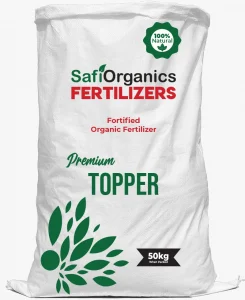
Safi Topper fertilizer is designed to improve soil health while supplying crops with the nutrients they need for consistent growth and productivity.
Improves Nutrient Uptake Efficiency
Healthy chili plants depend on their ability to absorb nutrients from the soil. Safi Topper helps improve nutrient availability, allowing roots to access essential elements more effectively.
This supports vigorous vegetative growth, stronger stems, and healthier foliage, creating a solid foundation for high yields later in the season.
Promotes Strong Flowering and Fruit Set
Flower retention and fruit development are critical stages in chili farming. Safi Topper provides balanced nutrition that supports flowering and helps reduce premature flower drop. As a result, plants are able to develop more fruits and achieve better overall productivity.
Enhances Plant Resistance to Environmental Stress
Chili crops are often exposed to drought, heat, and changing weather conditions. By improving soil health and nutrient availability, Safi Topper helps plants cope better with environmental stress.
Stronger plants are generally more resilient during dry spells and temperature fluctuations.
Supports Higher Yield and Fruit Quality
Proper nutrition directly influences fruit size, color, and uniformity. Farmers using balanced fertilization programs often achieve more marketable fruits and improved harvest quality, leading to better returns from their chili enterprise.
Helps Reduce Disease Pressure
Healthy plants are naturally better equipped to withstand disease challenges. By supporting balanced growth and reducing nutrient-related stress, Safi Topper helps strengthen the plant’s natural defense mechanisms, reducing susceptibility to certain stress-related diseases and infections.
Why Biochar Is Ideal for Chili Farming
Biochar has become increasingly popular among farmers seeking sustainable ways to improve soil productivity. Its unique structure provides multiple benefits that support healthy chili growth.
Improves Soil Structure
Biochar helps loosen compacted soils, allowing roots to penetrate deeper and access water and nutrients more efficiently. Improved aeration also creates a healthier environment for root development.
Increases Water Retention
One of biochar’s most valuable benefits is its ability to hold moisture in the soil. This helps maintain consistent water availability during dry periods and reduces drought stress on chili plants.
Enhances Nutrient Retention
Biochar acts like a sponge for nutrients, helping reduce losses through leaching. Nutrients remain available to crops for longer periods, improving fertilizer efficiency and reducing wastage.
Supports Beneficial Soil Microorganisms
Healthy soils contain billions of beneficial microorganisms that help break down organic matter and release nutrients. Biochar provides habitat for these microbes, encouraging nutrient cycling and improving overall soil fertility.
Helps Correct Soil Acidity
Many chili-growing areas experience challenges with acidic soils. Biochar can help moderate soil acidity, creating a more favorable pH range that improves nutrient availability and uptake.
Contributes to Long-Term Soil Fertility
Unlike many soil amendments that break down quickly, biochar remains in the soil for years. This allows it to support productivity over multiple growing seasons while continuously improving soil health.
Additional Tips for High Chili Yields
In addition to proper fertilization, farmers can improve productivity by adopting sound crop management practices.
Proper irrigation helps prevent moisture stress, while mulching conserves soil moisture and suppresses weeds.
Timely pest and disease control reduces crop losses and protects fruit quality. Regular soil health monitoring allows farmers to identify potential fertility problems early, while crop rotation and the addition of organic matter help maintain long-term soil productivity.
Conclusion
Fertilizer selection plays a crucial role in successful chili farming. Nutrient deficiencies, poor soil health, and environmental stress can significantly reduce yields and fruit quality if not properly managed.
Safi Topper provides balanced nutrition that supports healthy plant growth, flowering, and fruit production, while biochar improves soil structure, nutrient retention, and long-term soil fertility.