Root-knot nematodes are becoming a major threat to crop production in Kenya, especially among vegetable farmers who depend on high-value horticultural crops for income.
These microscopic soil pests attack plant roots, causing severe damage that often goes unnoticed until crops begin to wilt, yellow, or fail completely. In many cases, farmers mistake nematode damage for fertilizer deficiency, drought stress, or fungal diseases, leading to delayed control measures and increased losses.
In Kenya, root-knot nematodes commonly affect crops such as tomatoes, capsicum, cucumbers, onions, carrots, watermelons, French beans, spinach, and even fruit tree seedlings.
These crops are widely grown in regions such as Kirinyaga, Murang’a, Kajiado, Nyeri, Nakuru, Embu, and parts of the Rift Valley, where intensive year-round farming is practiced. Because many farmers repeatedly plant the same crops on the same land, nematode populations build up rapidly in the soil, worsening the problem each season.
The economic destruction caused by root-knot nematodes can be devastating for Kenyan farmers.
Infested farms often experience poor crop growth, reduced fruit quality, low yields, and, in severe cases, total crop failure. For example, a tomato farmer expecting 300 crates per acre may harvest fewer than half that amount due to nematode infestation.
Fortunately, farmers can manage root-knot nematodes sustainably through organic farming practices that improve soil health naturally.
Companies such as Safi Organics are providing Kenyan farmers with sustainable organic fertilizer solutions, such as Safi Sarvi and Safi Topper, that not only improve yields but also restore long-term soil fertility.
What Causes Root-Knot Nematode Infestation?
Root-knot nematodes thrive in conditions that are common in many farming regions across Kenya. Poor soil management, continuous cropping, and declining soil fertility have made it easier for these destructive pests to multiply rapidly.
One of the biggest causes of nematode infestation is continuous planting of the same crop on the same piece of land. Farmers who repeatedly grow tomatoes, capsicum, cucumbers, onions, or other susceptible crops without crop rotation create the perfect environment for nematodes to survive and reproduce season after season.
Poor Soil Health
Another major cause is poor soil health.
Soils that lack organic matter and beneficial microorganisms are more vulnerable to pest attacks. Overdependence on synthetic fertilizers can gradually degrade soil structure, reduce microbial diversity, and weaken plant root systems. Weak plants become easy targets for nematodes and other soil-borne diseases.
The use of infected seedlings also contributes to the spread of root-knot nematodes. Farmers who buy seedlings from uncertified nurseries may unknowingly introduce nematodes into clean fields. Once established in the soil, nematodes are difficult and expensive to eliminate completely.
Sandy Soils
Warm temperatures and sandy soils further encourage nematode activity. Many horticultural farming areas in Kenya experience favorable conditions for nematode reproduction throughout the year, especially under irrigation farming. Poor drainage and inadequate soil management can also worsen infestations.
In addition, lack of organic soil improvement practices has contributed to increasing nematode problems among Kenyan farmers. Healthy soils naturally contain beneficial organisms that suppress harmful pests. The regular use of organic fertilizer, compost, and biochar helps restore soil biology and improve plant resistance against nematode attacks.
Signs and Symptoms Farmers Should Watch Out For
Root-knot nematodes are dangerous because the damage often begins underground before farmers notice visible symptoms on the crop. By the time the problem becomes obvious, the infestation may already be severe and affecting yields significantly.
Stunted Growth
One of the earliest signs is stunted crop growth. Affected plants appear smaller and weaker compared to healthy plants in the same field. In many cases, crops fail to develop properly even after applying fertilizer and adequate irrigation.
Yellowing of the Leaves
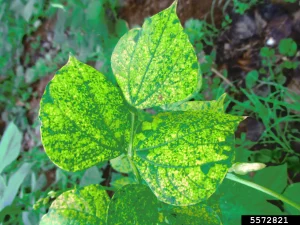
Farmers may also notice yellowing leaves, commonly mistaken for nutrient deficiency. The plants may begin wilting during hot afternoons despite sufficient soil moisture. This happens because damaged roots cannot absorb enough water and nutrients to support healthy plant growth.
In crops such as tomatoes, capsicum, cucumbers, and watermelons, nematode infestation often leads to reduced flowering and poor fruit formation. Fruits may become smaller, fewer in number, and lower in market quality. This directly affects farmer profits, especially for those supplying supermarkets and export markets.
Uneven Crop Growth
Another common symptom is uneven crop growth across the farm. Some sections may appear healthy while others show weak, stressed plants. This patchy appearance is usually a strong indicator of soil-borne pest problems such as nematodes.
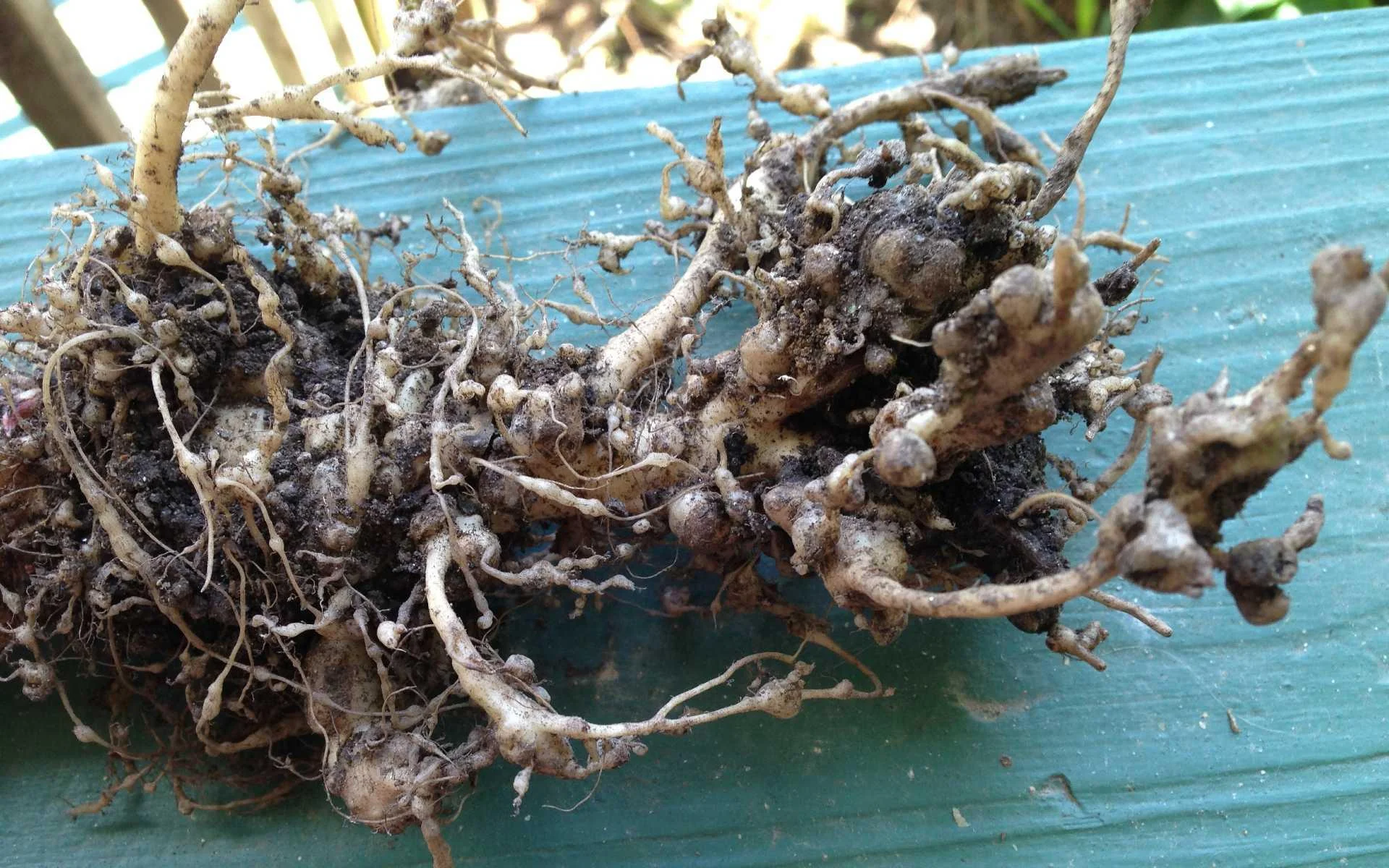
The clearest sign of root-knot nematodes is found below the soil surface. When infected plants are uprooted, the roots show swollen knots or galls. These root galls interfere with nutrient uptake and weaken the entire plant. In severe infestations, roots may become heavily deformed and start rotting due to secondary fungal infections.
Crops Commonly Affected by Root-Knot Nematodes in Kenya
Root-knot nematodes attack a wide range of crops grown by Kenyan farmers, particularly high-value horticultural crops.
These pests are more common in areas practicing intensive farming and irrigation throughout the year.
Some of the most commonly affected crops include:
- Tomatoes
- Capsicum (bell peppers)
- Cucumbers
- Watermelons
- Onions
- Carrots
- French beans
- Spinach
- Kales (sukuma wiki)
- Eggplants
- Okra
- Cabbages
- Potatoes
- Sweet potatoes
- Coffee seedlings
- Banana seedlings
- Passion fruit
- Pawpaw (papaya)
- Avocados
- Tree nurseries and vegetable seedlings
Vegetable farmers are among the most affected because these crops are often planted continuously on the same land.
In counties such as Kirinyaga, Murang’a, Nyeri, Nakuru, Kajiado, Embu, and Machakos, nematode infestations have become a major challenge in greenhouse farming and open-field vegetable production.
The damage caused by nematodes reduces both crop quality and yields. For example:
- Tomatoes may produce fewer and smaller fruits
- Onions may fail to bulb properly
- Cucumbers and watermelons may experience poor vine growth
- Carrots may become deformed and unmarketable
- Fruit tree seedlings may show slow growth and weak root systems
Organic Ways to Control Root-Knot Nematodes
Organic control methods focus on improving soil health while naturally reducing nematode populations. These methods are sustainable, environmentally friendly, and cost-effective for Kenyan farmers.
Practice Crop Rotation
Continuous planting of the same crop encourages nematode multiplication in the soil. Farmers should rotate susceptible crops such as tomatoes, capsicum, and cucumbers with cereals like maize or sorghum.
Crop rotation disrupts the nematode life cycle and gradually reduces infestation levels.
Use Organic Fertilizer
Applying organic fertilizer improves soil structure, increases microbial activity, and strengthens plant roots. Healthy soils support beneficial organisms that naturally suppress harmful pests such as root-knot nematodes.
Unlike excessive chemical fertilizer use, organic fertilizers improve long-term soil fertility and sustainability.
Products from Safi Organics, such as Safi Sarvi and Safi Topper, help farmers build healthier soils while improving crop productivity.
Add Compost and Organic Matter
Organic matter, such as compost, farmyard manure, and biochar, increases beneficial soil microorganisms. These organisms compete with harmful pests and help create a balanced soil ecosystem.
Organic matter also improves water retention and nutrient availability, which promotes stronger crop growth.
Practice Soil Solarization
Soil solarization involves covering moist soil with transparent plastic sheets during hot weather for several weeks. The trapped heat raises soil temperatures and kills many soil-borne pests, including nematodes.
This method is especially useful for greenhouse farmers before planting new crops.
Use Certified Healthy Seedlings
Nematodes can easily spread through infected seedlings. Farmers should always buy seedlings from trusted and certified nurseries to avoid introducing pests into clean farms.
Healthy seedlings establish faster and develop stronger root systems.
Improve Soil Drainage
Poorly drained soils create stressful conditions for crops and encourage pest problems. Proper drainage helps maintain healthy root development and reduces plant stress.
Raised beds and proper irrigation management can help improve drainage in vegetable farms.
Incorporate Biochar-Based Soil Conditioners
Biochar-based soil conditioners help improve soil biology, nutrient retention, and moisture conservation. They also create favorable conditions for beneficial soil microbes that suppress harmful organisms naturally.
Many Kenyan farmers are now adopting biochar-enhanced organic fertilizer solutions to restore degraded soils and improve yields sustainably.
Maintain Proper Farm Hygiene
Farm tools, infected plant residues, and contaminated soil can spread nematodes from one section of the farm to another. Farmers should remove infected crops after harvesting and clean farm equipment regularly.
Good farm hygiene reduces the risk of future infestations.
Why Kenyan Farmers Should Choose Safi Organics Fertilizers
Many farmers in Kenya are searching for fertilizer solutions that not only improve yields but also restore long-term soil health. Safi Organics has become one of the leading providers of sustainable organic fertilizer solutions tailored to Kenyan farming conditions.
It focuses on improving soil fertility naturally through biochar-enhanced organic fertilizers that support healthy crop growth and long-term soil regeneration.
Safi Sarvi Organic Fertilizer
Safi Sarvi Fertilizer is designed to improve soil fertility, strengthen root systems, and increase nutrient retention in the soil.
Benefits of Safi Sarvi include:
- Improved soil structure
- Increased microbial activity
- Better nutrient availability
- Enhanced moisture retention
- Stronger root development
- Improved crop yields
Safi Sarvi is suitable for a wide range of crops including tomatoes, maize, beans, vegetables, fruits, and coffee.
For farmers battling root-knot nematodes, stronger roots and healthier soils help crops become more resistant to pest attacks.
Safi Topper Fertilizer
Safi Topper Fertilizer is a nitrogen-rich top-dressing fertilizer that promotes healthy vegetative growth while improving soil health.
Unlike many conventional top dress fertilizers, Safi Topper releases nutrients gradually, reducing nutrient loss and supporting long-term soil productivity.
Benefits of Safi Topper include:
- Strong vegetative growth
- Improved soil fertility
- Slow nutrient release
- Increased crop productivity
- Better moisture conservation
- Sustainable soil regeneration
Farmers growing crops such as maize, vegetables, and horticultural crops can benefit greatly from balanced nutrition and healthier soil conditions.
Why Safi Organics Stands Out
Kenyan farmers are increasingly choosing Safi Organics because the company focuses on both productivity and sustainability.
Key reasons farmers prefer Safi Organics include:
- Products designed for Kenyan soils
- Improved long-term soil health
- Increased crop yields
- Sustainable farming solutions
- Reduced soil acidity
- Better moisture retention
- Support for beneficial soil microorganisms
- Environmentally friendly fertilizer technology
By investing in healthy soils today, farmers can achieve more stable yields and reduce future production challenges caused by soil degradation and pest pressure.
Conclusion
Root-knot nematodes are one of the most destructive soil pests affecting Kenyan farmers today. These microscopic pests attack plant roots, weaken crops, and significantly reduce yields in important crops such as tomatoes, cucumbers, onions, capsicum, carrots, and fruit seedlings.
For many farmers, nematode infestations lead to major economic losses due to poor crop performance, reduced market quality, and increased production costs. However, sustainable farming practices can help farmers control nematodes while improving long-term soil productivity.
As Kenyan agriculture continues to face challenges related to soil degradation and pest pressure, investing in soil health remains one of the most effective long-term solutions for profitable and sustainable farming.