
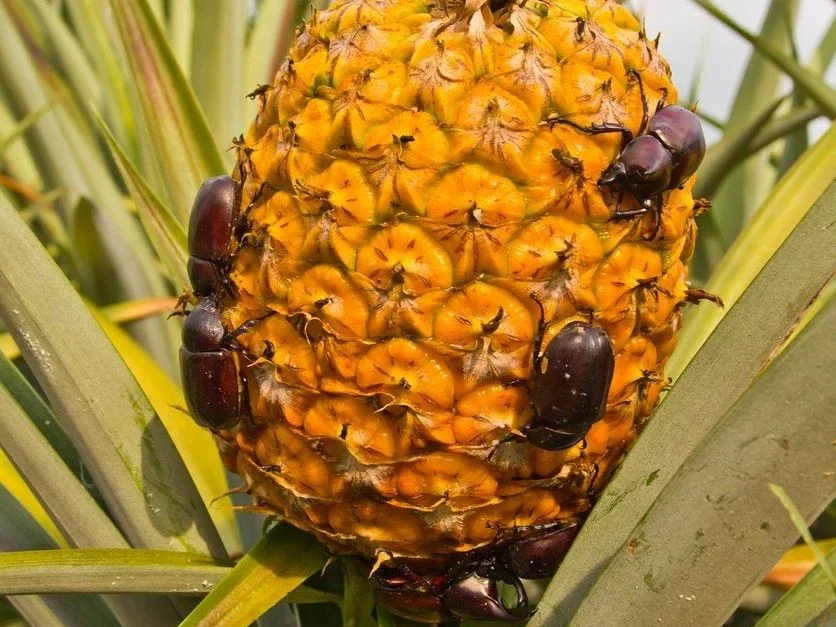

Pineapple is an essential crop in Kenya, valued for its nutritional benefits, contribution to household income, and export potential. It is widely grown by smallholder farmers in coastal and other suitable regions, providing both fresh fruit and processed products for local and international markets.
However, pineapple production is often affected by various diseases that reduce yield, compromise fruit quality, and limit income potential. Leaf, fruit, and root infections caused by fungi, bacteria, viruses, and nematodes can severely impact plant health and productivity. Effective disease management is therefore crucial for sustainable pineapple farming.
To learn more about pineapple farming, you can read our article Pineapple Farming in Kenya to understand more about the benefits and crucial steps needed in pineapple farming.
10 Common Pineapple Diseases in Kenya
1. Heart Rot Pineapple Disease
Symptoms of Heart Rot
Pineapple plants affected by heart rot show browning and wilting of the central leaves, often leading to the collapse of the heart leaf. Infected plants may appear stunted, and in severe cases, the growing point dies, preventing new leaves from developing.
Spread of Heart Rot
Heart rot is caused by Phytophthora fungi, which thrive in waterlogged or poorly drained soils. The disease can spread rapidly during periods of heavy rainfall or excessive irrigation. Contaminated tools and planting material may also contribute to the spread.
Management of Heart Rot
To manage heart rot, ensure proper drainage to prevent waterlogging around the plants. Fungicide applications during wet periods can reduce the spread of the fungus. Lastly, using resistant pineapple varieties and maintaining good field hygiene by removing infected plants further helps control the disease.
Considerations for Heart Rot
Early detection is crucial to prevent severe losses. Maintaining overall plant health through balanced soil fertility, organic amendments, or organic fertilisers can improve plant resilience, although these measures should complement, not replace, direct disease management practices.
2. Black Rot Pineapple Disease
Symptoms of Black Rot
Pineapple plants affected by black rot develop black, sunken lesions on the fruit surface. The rot often extends into the internal flesh, causing softening and decay that makes the fruit unmarketable. Severe infections can lead to significant post-harvest losses, especially during storage and transportation.
Spread of Black Rot
Black rot is caused by the soil-borne fungus Thielaviopsis paradoxa. It spreads primarily through infected material, such as crowns and slips, and can persist in contaminated soil.
Management of Black Rot
Managing black rot begins with using disease-free planting material, including crowns, slips, and suckers. Pineapple farmers should remove and destroy infected fruits and plant debris to prevent the fungus from surviving in the field.
Also, maintaining clean fields and practising good sanitation reduces disease pressure, while proper spacing improves air circulation and limits moisture accumulation on fruits.
Considerations for Black Rot
Early identification of black lesions allows farmers to take timely action to prevent post-harvest losses. In addition, supporting plant health with balanced nutrition, compost, or bio-organic fertilisers like Safi Sarvi Fertiliser can improve fruit resilience. Still, direct management practices remain essential for controlling black rot effectively.
3. Fruitlet Core Rot
Symptoms of Fruitlet Core Rot
Pineapple plants affected by fruitlet core rot develop a brown, dry core in developing fruits. Infected fruits may fail to develop correctly, and the rot can spread from the core to the surrounding flesh, reducing fruit quality and marketability.
Severe infections can lead to substantial yield losses, particularly in areas with high humidity.
Spread of Fruitlet Core Rot
The disease is caused by a fungal infection during the flowering and fruiting stages. Spores can infect developing fruits through flowers or wounds, and conditions of high humidity and poor air circulation favour disease development.
Management of Fruitlet Core Rot
To manage fruitlet core rot, farmers should apply fungicides during early flowering and fruit development stages. Maintaining proper spacing between plants improves air circulation and reduces humidity, helping limit fungal infections.
Using clean, disease-free planting material prevents the introduction of the fungus into the field.
Considerations for Fruitlet Core Rot
Early detection of infected fruits allows farmers to remove them promptly, reducing further spread.
Supporting plant vigour through balanced soil fertility and organic or bio-organic amendments can improve resilience, though direct management practices remain essential for adequate control.
4. Fusariosis
Symptoms of Fusariosis
Pineapple plants affected by fusariosis show yellowing of older leaves, wilting, and overall stunted growth.
The roots may rot and appear discoloured, reducing the plant’s ability to take up water and nutrients.
Severe infections can lead to plant death and significant yield losses, especially in poorly drained soils.
Spread of Fusariosis
A soil-borne fungus of the Fusarium genus causes fusariosis.
The pathogen spreads through contaminated soil, water, and farming tools.
Continuous cultivation of pineapples in the same soil and poor field hygiene increases the risk of infection.
Management of Fusariosis
To manage fusariosis, farmers should practice crop rotation with non-host crops to reduce pathogen buildup in the soil.
Planting resistant pineapple varieties and ensuring proper irrigation to avoid waterlogging can helpminimisee disease development.
Removing and destroying infected plants and debris further reduces the source of infection.
Considerations for Fusariosis
Early identification of yellowing and wilting plants allows timely interventions to prevent severe losses.
Maintaining healthy soil through organic or bio-organic amendments can improve plant vigour and resilience, but direct management practices remain essential for controlling fusariosis effectively.
Bacterial Diseases
5. Bacterial Heart Rot Pineapple Disease
Pineapple plants affected by bacterial heart rot develop soft, water-soaked leaves that often collapse toward the centre of the plant. Infected tissue emits a foul odour, and the growing point dies, preventing new leaves from developing.
Spread of Bacterial Heart Rot
The disease is caused by the bacterium Erwinia chrysanthemi and spreads through contaminated water, rain splash, and wounds in the leaves.
Tools and equipment that come into contact with infected plants can also contribute to the spread of the bacteria.
Management of Bacterial Heart Rot
To manage bacterial heart rot, farmers should avoid overhead irrigation that wets the leaves and creates favourable conditions for bacterial growth.
Removing and destroying infected plants prevents the pathogen from spreading.
Using clean tools and disinfecting equipment between fields also reduces the risk of contamination.
Considerations for Bacterial Heart Rot
Early detection is critical, as the disease can progress rapidly under wet conditions.
Maintaining healthy, vigorous plants through proper soil fertility and organic amendments can help reduce susceptibility.
However, direct management practices such as sanitation and careful irrigation are essential for controlling bacterial heart rot effectively.
6. Bacterial Wilt
Symptoms of Bacterial Wilt
Pineapple plants affected by bacterial wilt exhibit leaf wilting, yellowing, and stunted growth.
Infected plants may fail to produce healthy fruits, and severe infections can lead to plant death, reducing overall yield and crop quality.
The disease is caused by soil-borne bacteria that persist in contaminated soil. It spreads through water movement, infected soil, and sometimes through farming tools.
Continuous pineapple cultivation in the same soil without proper sanitation increases the risk of infection.
Management of Bacterial Wilt
Managing bacterial wilt involves crop rotation with non-host crops to reduce the bacterial population in the soil. Using disease-free planting material and maintaining proper field hygiene can minimise the spread.
Pineapples farmers should avoid waterlogging and ensure they only plant in well-drained soils.
Considerations for Bacterial Wilt
Early detection is essential to prevent significant yield losses.
Healthy soil with adequate nutrients and organic amendments can support plant vigour, making plants less susceptible, but direct management practices remain essential for controlling bacterial wilt effectively.
Viral Diseases
7. Pineapple Mealybug Wilt Virus
Symptoms of Pineapple Mealybug Wilt Virus
Pineapple plants infected with PMWaV exhibit curling and reddening of the leaves, stunted growth, and sometimes reduced fruit size. Infected plants may also show weakened vigour, poor flowering, and decreased yield.
Severe infections can affect multiple plants in a field, leading to significant production losses.
Spread of Pineapple Mealybug Wilt Virus
The virus is spread primarily by mealybugs, which feed on the plant and transmit the pathogen. It can also be transmitted through infected planting material, such as suckers or crowns, if proper virus-free stock is not used.
Management of Pineapple Mealybug Wilt Virus
To manage PMWaV, farmers should focus on controlling mealybug populations through chemical or biological methods.
Using virus-free suckers for planting is essential to prevent introducing the disease into the field.
Maintaining good field hygiene and monitoring plants regularly helps detect and manage infections early.
8. Pineapple Mosaic Virus
Symptoms of Pineapple Mosaic Virus
Pineapple plants infected with mosaic virus show mosaic patterns on the leaves, with areas of light and dark green tissue. Chlorosis, or yellowing of leaves, is common, and infected plants often exhibit stunted growth.
Fruit size and quality may be reduced, affecting overall yield and marketability.
Spread of Pineapple Mosaic Virus
The virus is primarily spread by aphids, which transmit the pathogen as they feed on infected plants. Contaminated planting material, such as crowns or suckers from infected plants, can also introduce the virus into healthy fields.
Management of Pineapple Mosaic Virus
To manage mosaic virus, farmers should use virus-free planting material and regularly inspect their fields. Infected plants should be removed and destroyed to prevent further spread.
Also, maintain proper spacing and control aphid populations in your farm.
Considerations for Pineapple Mosaic Virus
Since viral infections cannot be cured once established, prevention is the key. Healthy soil and good plant nutrition through organic or bio-organic amendments may improve plant vigour and tolerance.
Still, primarily control relies on using clean planting material and managing vectors like aphids.
Nematode and Other Soil-Borne Diseases
9. Root-Knot Nematodes
Pineapple plants affected by root-knot nematodes develop swollen galls on their roots, which interfere with water and nutrient uptake.
Above-ground symptoms include stunted growth, yellowing leaves, and reduced flowering and fruit formation. Severe infestations can significantly lower yield and plant vigour.
Spread of Root-Knot Nematodes
Root-knot nematodes are soil-borne and spread through contaminated soil, water, and farming tools.
Fields with previous nematode infestations or continuous pineapple cultivation without rotation are more susceptible to high nematode populations.
Management of Root-Knot Nematodes
Managing root-knot nematodes involves crop rotation with non-host crops to reduce nematode populations in the soil.
Incorporating organic amendments like compost or bio-organic fertilisers improves soil health and supports beneficial organisms that suppress nematodes, planting resistant varieties where available further minimises damage.
Considerations for Root-Knot Nematodes
Early detection through root inspection allows farmers to implement management strategies before severe yield loss occurs.
Maintaining healthy soil and vigorous plants improves resilience, but integrated management combining rotation, organic amendments, and resistant varieties offers the most effective long-term control.
10. Black Spot or Leaf Spot
Symptoms of Black Spot or Leaf Spot
Pineapple plants infected with Alternaria spp. Develop dark, circular spots on their leaves. Severe infections can cause premature leaf drop, reducing the plant’s photosynthetic ability and overall vigour. Infected plants may produce fewer or smaller fruits, resulting in lower yield and quality.
Spread of Black Spot or Leaf Spot
The disease spreads through fungal spores, which are carried by water splash from rain or irrigation. Overcrowded planting and poor air circulation in the canopy create favourable conditions for rapid disease development.
Management of Black Spot or Leaf Spot
To manage black spot or leaf spot, farmers should remove and destroy infected leaves to reduce the source of spores. Fungicide applications can control the spread during wet conditions.
Maintaining proper plant spacing improves air circulation and lowers humidity, helping prevent further infections.
In conclusion, managing pineapple diseases is essential for healthy crops, better yields, and improved fruit quality.
Farmers should adopt an integrated management approach that includes using clean planting material, planting resistant varieties, practising crop rotation, and maintaining proper field hygiene.
Lastly, maintaining healthy soil through compost or bio-organic fertilisers can further strengthen plant resilience and support sustainable pineapple production.

